§ Maurice Ravel — 1928, M. 81
Bolero
Ballet — premiered at the Opéra de Paris, 22 November 1928
A scholarly edition established from the complete 1928 orchestral manuscript held at the Morgan Library, together with all preparatory sources — the first monumental French edition. Editorial direction: François Dru and Quentin Hindley. Two scores in the volume — the unprecedented ballet version 1928 and the concert version 1929.
Ravel Papier à musique — a documentary on the Bolero.
Video series dedicated to Ravel facing his manuscripts, in collaboration with the Maurice Ravel Foundation and the Maurice Ravel Festival / Academy.
01 // Manuscript
Primary source
1928 Complete orchestral manuscript held at the Morgan Library, New York. Preparatory sources at the BnF, the British Library and the Archives of the Palais princier de Monaco.
02 // Premiere
Ballets Ida Rubinstein
22.XI.1928 Premiered at the Opéra de Paris by the Ballets Ida Rubinstein. Restored 1928 ballet version: Concertgebouw Amsterdam, George Benjamin conducting, January 2019.
03 // Volume
Collector's edition
212 pages Format 24.5 × 34 cm, sewn binding, 120 gsm paper. Two scores, critical apparatus and discography. Price: €71.00 excl. VAT (€75.26 incl. VAT).
Editorial direction & reading committee

Conductor
Louis Langrée

Conductor & musicographer
Alain Pâris

Conductor & editor
Quentin Hindley

Conductor
Pascal Rophé
Editorial direction
François Dru and Quentin Hindley, editors of the 1928 ballet version; Quentin Hindley, editor of the 1929 concert version.
My Bolero with Nathalie Stutzmann.
Nathalie Stutzmann long refused the Bolero — too much colour, not enough shade. Until a musicologist friend led her to rediscover the score in its original ballet version (Ida Rubinstein, 1928). Hilan Warshaw's documentary follows the conductor and the Atlanta Symphony Orchestra through this rediscovery. Available on VOD at medici.tv.
Introductory note · Volume I (2018)
Bolero, the unknown yet so famous…
By François Dru — editorial director of the Ravel Edition · 25 September 2018
This contradictory formula may come as a surprise, yet there is a dizzying gap between the dazzling success of this short orchestral piece and what we know of the circumstances of its composition or of the first months of its existence. According to Édouard Ravel, or to the circle of friends at the Belvédère, the composer of this “orchestral fabric without music”, in Vladimir Jankélévitch's words, was the first to be surprised by the immediate and triumphant spread of a work so thoroughly compromised in its historiography and its musical gesture. The print runs of the Durand scores, only a few months after their first edition, or the number of arrangements published and recorded in the very early 1930s, are still enough to make one's head spin. It should be remembered that at its premiere, at the Paris Opéra on 22 November 1928, Bolero was one of the short tableaux of a dance gala evening that showcased the fashionable composers of Paris. Amid the orchestral brilliance and din, it was quickly forgotten that these 340 repetitive bars were originally intended for a Ballet in one act — still listed under that name in the Ravel catalogue issued by Durand in 1931 — and that the stage visuals were to share the spotlight with the musical shock coming from the pit. Moreover, as Manuel Cornejo shows in his preface to the two versions of the score in our edition, Boléro, still called Fandango two months before its premiere, was merely a hastily composed substitute for a late commission from Ida Rubinstein, who had originally wanted orchestrations of piano pieces by Isaac Albéniz.
A close reading of the complete 1928 orchestral manuscript, held at the Morgan Library in New York, shows how quickly Ravel painted this Hispanic orchestral portrait: trivial mistakes in notes or rhythms, confusions in transferring his sketches (held at the Bibliothèque nationale de France) into ink, numerous hasty erasures, unfinished notation (missing stems, many repeat-bar signs to save time, etc.). The dating, “July–October 1928”, together with the composer's signature — only a month before the premiere — reinforces this visual impression of haste, confirmed by the composer's letters presented in this volume. Looking at the chronology of the ballet's revival from late 1928 to the following spring, and at the registration dates of the first editions as analysed by Nigel Simeone, it is surprising to realise that it was in fact the simultaneous proposals by Arturo Toscanini and Serge Koussevitzky to perform the work in concert — in New York in November 1929 under the Italian conductor for the concert premiere —, with the agreement of Ida Rubinstein, who held the performing rights, that triggered a very late editorial process at Durand.
It seems certain that the score and material used for the 1928 ballet remained in the incomplete state of manuscript copies. Apart from the Morgan Library manuscript and the preparatory piano versions (British Library and Archives of the Prince's Palace of Monaco), nothing remains of the thunderous premiere at the Paris Opéra, except Ravel's remark, in a letter of proof corrections sent in September 1929 to his faithful Lucien Garban, about a superfluous “Curtain” marking on a set of proofs. Likewise, the editorial process launched — once again in a rush — for the premiere of the concert version, and published in great haste by the publisher of the place de la Madeleine, reveals a certain fragility in the proofreading of the 1928 manuscript. A new wave of corrections or changes by the composer or his publisher, after the experience of the ballet, unfortunately spread significant philological problems. Errata soon proliferated among conductors to correct the defective material. One of the most striking examples is a handwritten note, held at the New York Public Library, written by Arturo Toscanini for his performances with the NBC Symphony Orchestra.
Alongside these misunderstandings and scribal errors, one must also mention the puzzling recording made under Ravel's direction a few weeks after the first edition of the score: a lower overall metronome marking than the printed one, and liberties taken by the players with Ravel's text through changes of phrasing. One clearly hears that only the soprano and tenor saxophones are present — a point confirmed by the moving interview with Marcel Mule, who played in the pit of the Opéra at the 1928 premiere and had politely told Ravel that he had gone astray in writing the saxophone part, calling for an almost imaginary sopranino in F… Just as the trombonist Léo Arnaud-Vauchant had dared to approach the Master to tell him that the slide positions indicated in the last bar were wrong. Errors the composer modestly acknowledged, but which his publisher never put on paper…
In view of this clinical assessment of the editorial shortcomings of the scores still in use, it was our duty, in the inaugural volume of the Ravel Edition — 90 years after the brilliant premiere of this unique experiment in the orchestral repertoire, and after an unprecedented gathering of sources —, to present an edition of the 1929 version cleared of all the flaws never corrected by the original publisher, nor even in recent editions. And, as an essential documentary corollary, we had to present the original, unpublished 1928 version of the work, in order to grasp the first purpose of this flamboyant instrumental kaleidoscope and to observe the changes made for its adaptation to the concert hall.
François Dru — 25 September 2018
Full or partial reproduction prohibited without the authorisation of the Ravel Edition.
Introduction
Two scores, two gestures
To reproduce the 1928 manuscript as it stands — absent-mindedness included — as a documentary basis, then to publish the 1929 concert version corrected after Ravel and the great conductors who championed it.
Volume I of the Ravel Edition is dedicated to Bolero. This scholarly edition introduces never-before-published workings based on the complete 1928 orchestral manuscript held at the Morgan Library (New York), the composer's preparatory manuscripts (Bibliothèque nationale de France, British Library and Archives of the Palais de Monaco) and numerous other sources presented for the very first time in this collector's volume — « historic » scores owned by Maurice Ravel, Piero Coppola1, Arturo Toscanini, and correspondence2.
This « ballet 1928 » version, as restored by the Ravel Edition, was performed by the Royal Concertgebouw Orchestra of Amsterdam under George Benjamin in January 20193.

The 1928 ballet version
Editors: François Dru and Quentin Hindley.
A reproduction of the 1928 version as it was created by the Ballets Rubinstein at the première at the Opéra de Paris. Edition established from the manuscript held at the Morgan Library. This engraving — unprecedented — replicates the exact musical notation and markings the composer himself left in the orchestral score he laid down in ink in 1928.
We have only considered the handwritten corrections left by Ravel in ink, as well as those resulting from scraping operations, modifications made during 1928.
We wished to present, without any intervention on our part, the mistakes and absent-mindedness of the composer left on his manuscript. On the 1928 ballet version
This faithful engraving, which reproduces Ravel's recurring markings and distinctive handwriting, is intended to be used as a documentary basis against which to gauge the editorial evolution that led to the creation of the first edition less than a year after the Parisian première.

The 1929 concert version
Editor: Quentin Hindley.
Corrected edition based on Ravel's own markings and other corrections introduced by illustrious conductors on the basis of the composer's modern first editions.
We also considered the various letters, notes and improvements introduced by the composer and conductors, revealing the many editorial issues and engraving errors with which the score and parts have historically been peppered. For this 1929 version, a publishing committee formed of conductors Louis Langrée, Alain Pâris and Pascal Rophé was consulted regarding the various questions raised by our sources4.
This engraving is intended to be used as a documentary basis against which to gauge the editorial evolution. On the articulation between the 1928 ballet and 1929 concert versions
This editorial work was carried out in collaboration with the following institutions: Les Amis de Maurice Ravel, The Morgan Library (New York), the New York Philharmonic Digital Archives, The British Library, the Archives of the Palais princier de Monaco, the Orchestre Philharmonique de Monte-Carlo, the Archives of the Théâtre royal de La Monnaie in Brussels, and the Royal Library of Belgium.
Note on the correction of the cello part after W. Mengelberg's material5
Note on the correction of the cello part after W. Mengelberg's material
On 8 March 1930, Willem Mengelberg conducted the Dutch première of Bolero in The Hague. In less than a month, this concert was followed by five further performances across the Netherlands.
On 31 May 1930, in the Grote Zaal of the Concertgebouw, Mengelberg recorded Bolero for the Columbia label. This session was the fourth of the year devoted to this score. On this occasion, a modification to the cello part can be heard.
From January to April 1930, Ravel, Coppola and Koussevitzky all recorded the first ten bars with two quarter notes (per bar) — entry of eighth notes at bar n°10. Unlike his colleagues, wishing to respect the published Orchestral Score (sic), Mengelberg asked his section to modify a part he believed to be defective.
For the record, on the manuscript deposited at the Morgan Library, Ravel wrote, in ink, quarter notes up to bar 10. On the same manuscript, eighth notes were added in pencil — without date or possible authentication of the correcting hand — on this same cello part, taking up the « mechanical » pianistic octave movement, as inscribed in the reduction to accompany the dancers.
The archives of the Royal Concertgebouw Orchestra of Amsterdam present the list of Bolero performances conducted by W. Mengelberg.
Full or partial reproduction prohibited without the authorisation of the Ravel Edition.
Critical notes
- Piero Coppola (1888-1971), Italian conductor, artistic director of the Compagnie française du gramophone from 1923, made several reference recordings with Ravel — including the first authorised recording of Bolero in January 1930. His annotated scores are among the volume's major sources.
- The correspondence used for this edition draws on the collections of Les Amis de Maurice Ravel, the American archives (New York Philharmonic Digital Archives, Morgan Library) and the Monegasque archives of the Fondation Maurice Ravel collection held at the Palais princier.
- Concertgebouw Orkest, George Benjamin conducting, Grote Zaal of the Concertgebouw in Amsterdam, January 2019 — modern première of the 1928 ballet version as restored by Ravel Edition.
- The reading committee ruled on the discrepancies observed between the 1928 orchestral manuscript, the 1929 corrected proofs, the annotated scores of the next generation of conductors, and the earliest recordings. It intervened only on the 1929 concert version, the 1928 ballet version being deliberately delivered without interpretive intervention.
- Willem Mengelberg (1871-1951), principal conductor of the Concertgebouw Orchestra of Amsterdam. The orchestral material he used and annotated provides invaluable testimony for resolving several ambiguous points in the cello part.
Ravel Edition · Volume I
A collector's volume, 212 pages, two scores
The first monumental French edition of Bolero, produced by a team of French musicologists and conductors.
Texts & critical apparatus
- General foreword — 25 pages. Manuel Cornejo traces the history of the work and its reception.
- Alain Pâris — comparative analysis of the first recordings of Bolero and their impact on our reading of the score.
- Discography 1930-1939 compiled by Jean Touzelet — complete survey of early phonographic testimonies.
- Critical apparatus — 27 pages. Previously unpublished analyses of the 1928 manuscript held at the Morgan Library and of the orchestral sketches at the BnF.
- Corrections and notes — 10 pages. Survey of editorial issues, omissions and errors in early editions.
- Full English translation of the texts and critical apparatus.
Iconography
- Facsimile reproduction of a page from the 1928 orchestral manuscript (Morgan Library).
- Letters from Maurice Ravel.
- Scores from the first print runs annotated by Maurice Ravel, Piero Coppola and Arturo Toscanini.
- Photographs of the Ballets Ida Rubinstein, recording sessions and historical documents.
Two scores in the volume
- Ballet version 1928 (unprecedented) — editors: François Dru and Quentin Hindley. Faithful engraving of the orchestral manuscript, as a documentary basis.
- Concert version 1929 — editor: Quentin Hindley. Corrected edition following Ravel and the great conductors, under the eye of the reading committee.
Recordings of the revised edition
Three landmark recordings
The Ravel Edition of Bolero has been recorded three times recently, championed by British and French conductors.


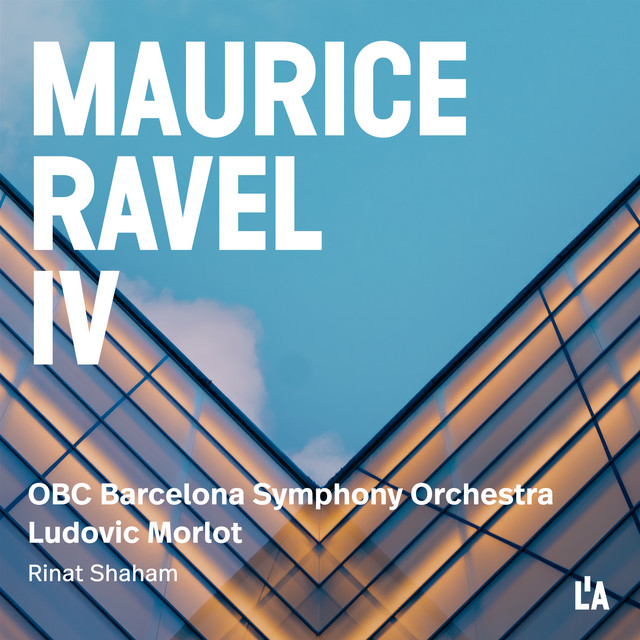 Third recording
Ludovic Morlot
Orquestra Simfònica de Barcelona i Nacional de Catalunya
L'Auditori · 1928 ballet version
▶ Listen on SpotifyPress
Bolero in the press
Frequently asked questions
Your questions about Bolero
What is the revised edition of Bolero?
Volume I of the Ravel Edition, based on the complete 1928 orchestral manuscript (Morgan Library) and the preparatory sources, under the editorial direction of François Dru and Quentin Hindley: the first monumental French edition of the work.
What is the difference between the 1928 ballet version and the 1929 concert version?
The 1928 ballet version reproduces the manuscript as it stands, including Ravel's slips: it is a documentary foundation. The 1929 concert version is corrected according to Ravel's indications and those of the great conductors who championed the work, with the advice of a reading committee (Louis Langrée, Alain Pâris, Pascal Rophé).
Which recordings of this edition exist?
John Wilson and the Sinfonia of London (Chandos), François-Xavier Roth and Les Siècles (Harmonia Mundi), and Ludovic Morlot and the Barcelona Symphony Orchestra (L'Auditori, 1928 ballet version).
What does the book contain?
A 212-page collector's volume (24.5 × 34 cm) with both scores, the critical apparatus and the discography, priced €71.00 excl. VAT (€75.26 incl. VAT).
Order